
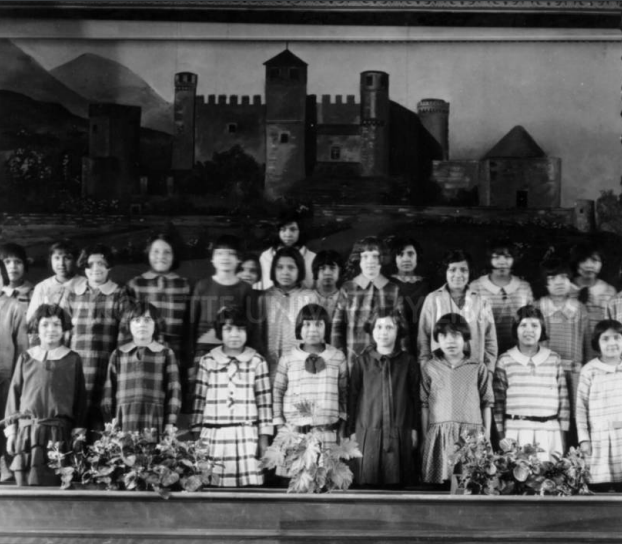
Native students at boarding schools found outlets for fun and, in some cases, felt a continuance of their own cultural practices in unexpected places where they could participate in, outside of the regular school curriculum. Extracurricular activities are important for the development of a child’s social and creative abilities, but also act as an escape from the reality of their daily life. In many cases, Native students faced physical, sexual, emotional, and spiritual abuse, neglect, and malnutrition in the schools, which picked at their spirit daily. These outlets of escape allowed a break from the harsh cruelties and made it possible for students to find hope for their future and a chance to stand out.
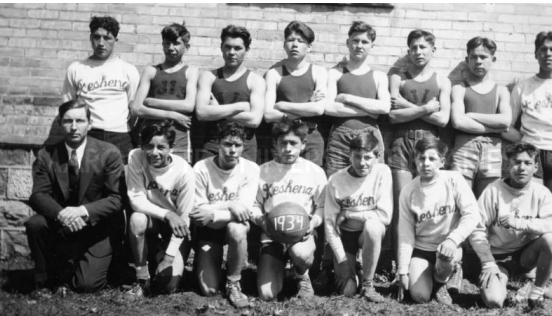
When available, sports were a popular pastime among the students, and the school priests and nuns usually encouraged it as well. Lacrosse, of Native origin, was discouraged. Yet, the seasons for “American” sports such as basketball and football were highly spoken about throughout the school; the priests communicated via letters about the promising and exciting season ahead. Although the male population dominated the sports realm in most cases, some schools offered sports such as basketball to the female youth as well. For instance, in the early 20th century, the Fort Shaw Indian school women’s basketball team held a strong reign in the public eye of female sports. Although the team faced inevitable prejudices against Natives from opposing teams and fans, the team remained an insurmountable force, having led their 7-person squad to an undefeated record in 1904. As one report from the Anaconda Standard notes, “There is no team in the state that can give them anything like a tussle. They stand alone and unrivaled. This may not be [pleasant] reading for the white girls…but it is true.”1 The renowned victories of the 1904 Fort Shaw Indian school’s women’s basketball team would leave a strong historical mark on the representation of Native women in sports and the integrity of Native boarding school students to stand up to the oppressors through their own form of expression.
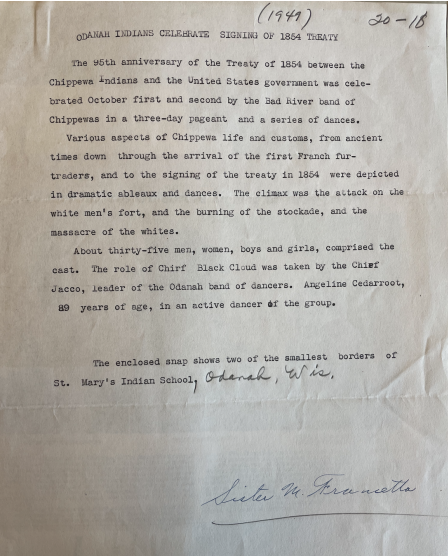
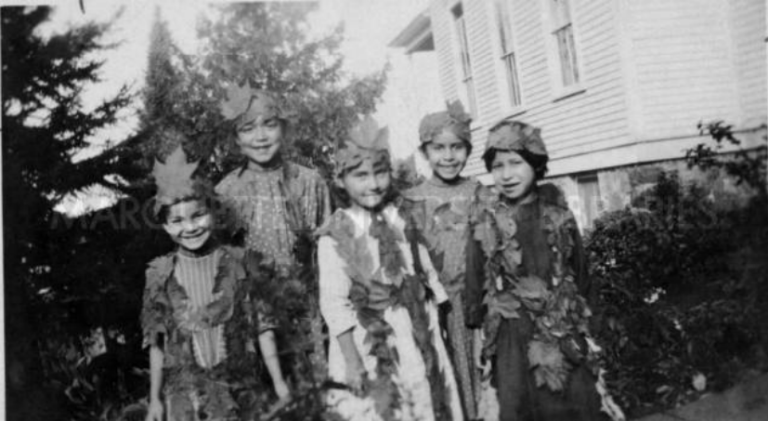
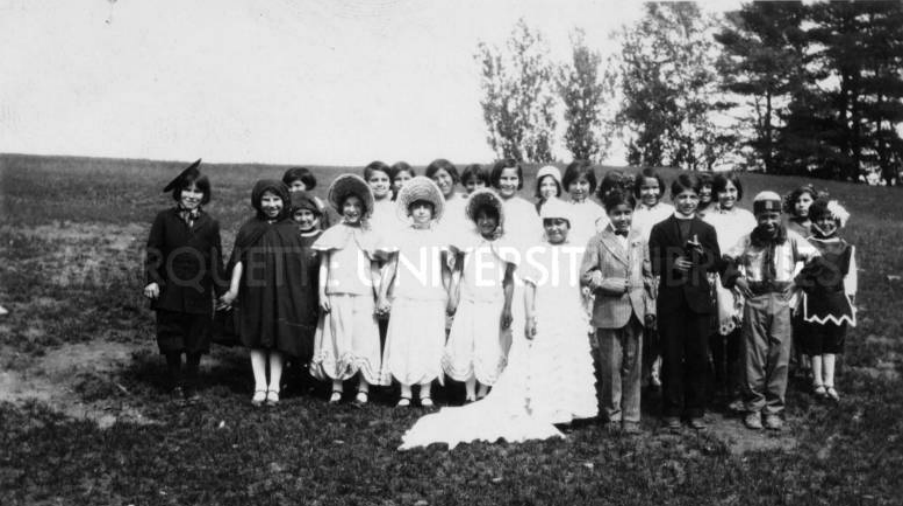
The school administration also organized theater productions for the students to partake in, where they further assimilated Native children into the Christian teachings and historical plays, but it also let the students express themselves through acting and costumes. In the St. Mary’s Indian school newspaper article from 1949, the author describes the production the students are putting on for the 95th anniversary of the signing of the treaty of 1854 by the Odanah Indians. Whilst explaining the significance of the play from the perspective of the non-Native administration, the writer states that “the climax was the attack on the white men’s fort, and the burning of the stockade, and the massacre of the whites.”2 This directly proves the school’s intent on forming a negative resonance with the Natives for the children to grasp and view the white men as the positive outtake. Furthermore, the students would act in plays that originated from Catholic traditions such as holidays dedicated to popular Christian saints or traditions commonly followed in Christianity and other denominations. As a form of playtime, children would dress in costumes of primarily white figures or act as part of a Christian tradition such as a wedding. This form of matrimonial play reinforces Western and Christian gender and marital norms, even as it is a form of play.
Records from the BCIM Archives
Transcriptions
“Odanah Indians Celebrate Signing of 1854 Treaty.”
Odanah Indians Celebrate Signing of 1854 Treaty (1949)
The 95th anniversary of the Treaty of 1854 between the Chippewa Indians and the United States government was celebrated October first and second by the Bad River band of Chippewas in a three-day pageant and a series of dances.
Various aspects of Chippewa life and customs, from ancient times down through the arrival of the first [French] fur-traders, and to the signing of the treaty in 1854 were depicted in dramatic [t]ableaux and dances. The climax was the attack on the white men’s fort, and the burning of the stockade, and the massacre of the whites.
About thirty-five meant [sic], women, boys and girls, comprised the cast. The role of [Chief] Black Cloud was taken by the Chief Jacco, leader of the Odanah band of dancers. Angeline Cedarroot, 89 years of age, in an active dancer of the group.
The enclosed snap shows two of the smallest borders of St. Mary’s Indian School, Odanah, Wis.